


By Manuel Wernsen
Contents
1. Summary
2. Introduction
3. Subjective vs. Objective Tools
4. Creating a Good Protocol
5. Turning Data into Action
6. Final Thoughts
7. References
8. About the Author
Summary
As S&C coaches, our first priority should be protecting our athletes from all kinds of injuries. After all, the best ability is availability. Whether protecting or progressing, a readiness-to-train protocol is a tool all S&C coaches should use with their players.
Introduction
In elite sports, every detail counts—and performance doesn't begin when the session starts but well before. An athlete's physical and mental state during training can be the difference between meaningful adaptation and unwanted overload, between steady progress and a costly injury setback. That's why understanding and monitoring an athlete's training readiness has become a cornerstone of high-performance environments.
Readiness isn't simply asking, "Are you feeling okay today?" It's a structured, data-informed process that blends subjective feedback with objective markers to assess how prepared an athlete will tolerate and benefit from the day's training load. Whether you're working with footballers deep in a congested match schedule or sprinters pushing toward a competition peak, identifying early signs of fatigue or under-recovery can guide intelligent decision-making and keep athletes on the path to peak performance.
From HRV (Heart Rate Variability) and neuromuscular jump tests to daily wellness surveys and mood check-ins, the tools to monitor readiness are more accessible than ever. However, they deliver real value only when implemented with context and consistency. In this article, we'll explore how to build a readiness protocol that works in practice: what metrics to track, how to interpret them, and how to turn data into action.
Real performance starts before the first rep is even done.
''That's why understanding and monitoring an athlete's training readiness has become a cornerstone of high-performance environments.''
Subjective vs. Objective Tools
Effective readiness protocols often combine subjective and objective tools to understand how an athlete responds to training and external stressors.

Subjective Tools
Subjective tools include daily wellness questionnaires, where athletes self-report on sleep quality, stress, muscle soreness, mood, and motivation. Though simple, these tools could be powerful when used correctly and consistently. These wellness questionnaires show the internal state of the athlete, which no device can fully capture, thereby proving its unique qualities. Trends in this data can be seen over time, and the data can indicate whether an athlete is on the edge of overtraining.
Objective Tools
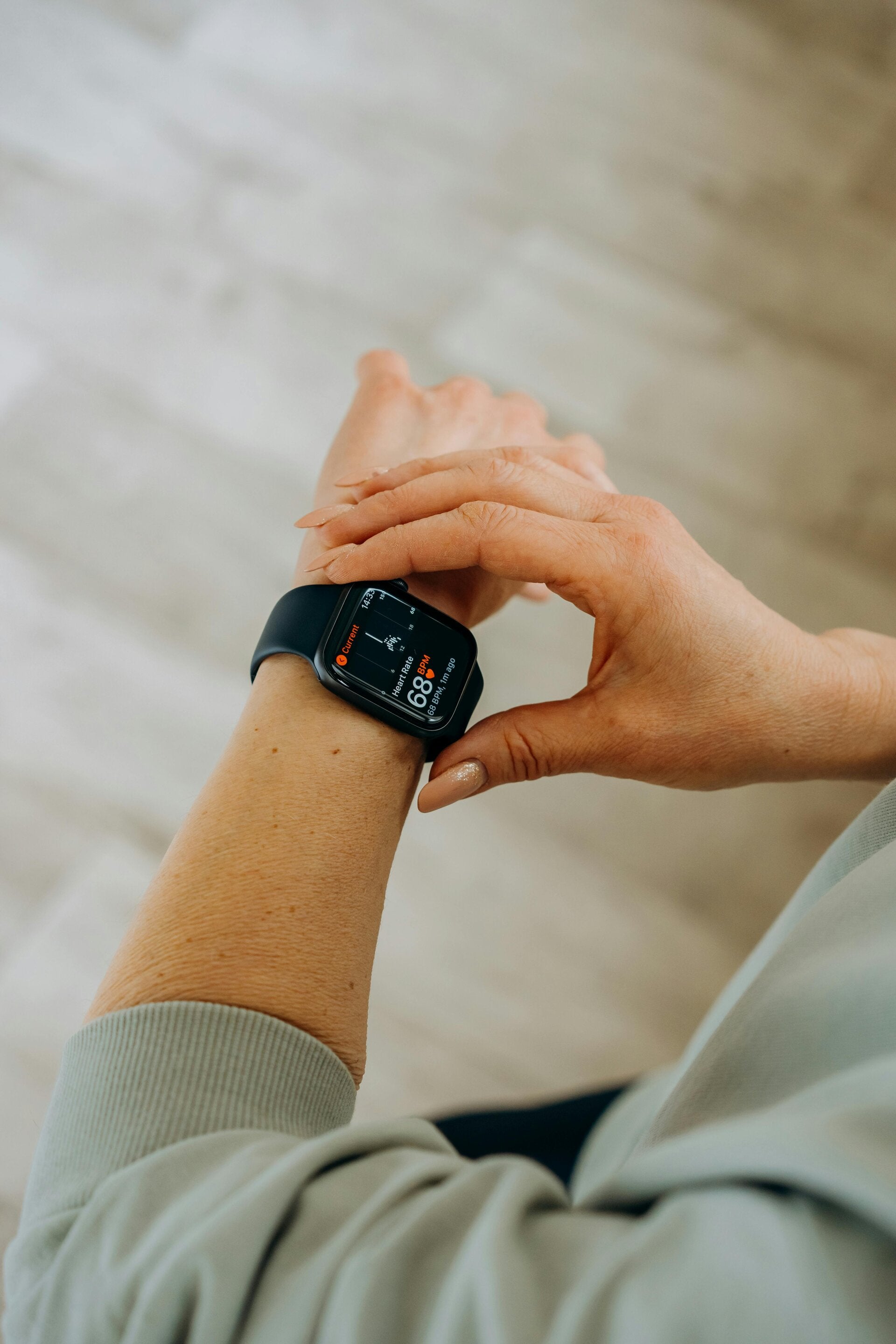
Objective tools, on the other hand, offer quantifiable markers. These objective tools include Heart Rate Variability (HRV), resting heart rate, neuromuscular tests like countermovement jumps (CMJ), grip strength, and reaction time. For example, a drop in jump height or RSI (reactive strength index) could indicate neuromuscular fatigue (Hamilton, 2009).
Of course, each tool has limitations, but together they give context. The key behind a good readiness to train protocol is consistency: it's not about finding perfect data but identifying meaningful trends that help us make better day-to-day decisions.
Creating a Good Protocol
As said, a good protocol doesn't need to be complex. The most important aspects of a good protocol are consistency and time efficiency, and it should be context-specific. The best protocols show a combination of objective and subjective tools. Receiving internal and external feedback should give us enough data to decide on the training load.
In a high-performance environment, time is everything. Thus, for a protocol to work it needs to be time-efficient. Start with a daily check-in routine. Before entering the club, the athletes should have completed the wellness questionnaire using an app or QR code. When the athletes enter the club, they should prepare for a quick objective test like a drop jump to show their daily RSI values. If a good workflow is created, the whole protocol should take 15-20 minutes for the entire team.
''The most important aspects of a good protocol are consistency and time efficiency, and it should be context-specific.''
Turning Data into Action
Collecting the data is only the start. The real value comes from using it to make valuable decisions. However, we shouldn't just cancel a session as soon as an athlete's RSI slightly drops or if his sleep isn't great. Instead, we should be consistent. Patterns over time matter more than one-off readings.
Let’s say an athlete’s RSI dropped and/or his sleep was inadequate. This should signal the specialist to adjust the session, not cancel it. You could reduce the volume, lower the intensity, or shift the focus to technical/tactical work or mobility. If the entire team’s readiness trends towards a lower readiness, this could show you that the microcycle has to be changed.
Finally, having a framework completes your protocol. Some high-performance setups use decision trees or readiness tiers to guide training options based on traffic light profiles. These systems promote consistency and reduce bias in daily decisions.
Traffic Light Framework
0-5% Drop
Normal variation; train as planned.
5-10% Drop
Monitor closely; consider adjusting volume and/or intensity.
>10% Drop
Potential neuromuscular fatigue; modify the session or implement recovery work.
''Patterns over time matter more than one-off readings.''
Final Thoughts
A good readiness-to-train protocol is one of the best tools an S&C coach can use. Of course, the protocol can not always be correct. However, combining both subjective and objective tools gives you a good understanding of the athlete's current status and how to load this athlete. Make sure you create a protocol that works for you and your team, stay consistent, and most of all, be a good coach. The data should support your coaching tuition, not replace it.
References
Hamilton, D. (2009). Drop Jump as an indicator of Neuromuscular fatigue in soccer players. Journal of Australian Strength and Conditioning, 17 (4), 3-8.
About the Author

Manuel Wernsen
Manuel is the founder and owner of Limitless Performance. Manuel has graduated from HAN university in Nijmegen, the Netherlands, with a Bachelor in Sports Sciences. Currently Manuel is working towards his NSCA certification.
Manuel has interned in the youth academy of a professional Eredivisie club and has worked with the female department. During this time he was responsible for all parts of the performance department. Manuel is ambitious, motivated and dedicated to not only fulfil athlete’s potential but also his fellow coaches and himself.
Add comment
Comments